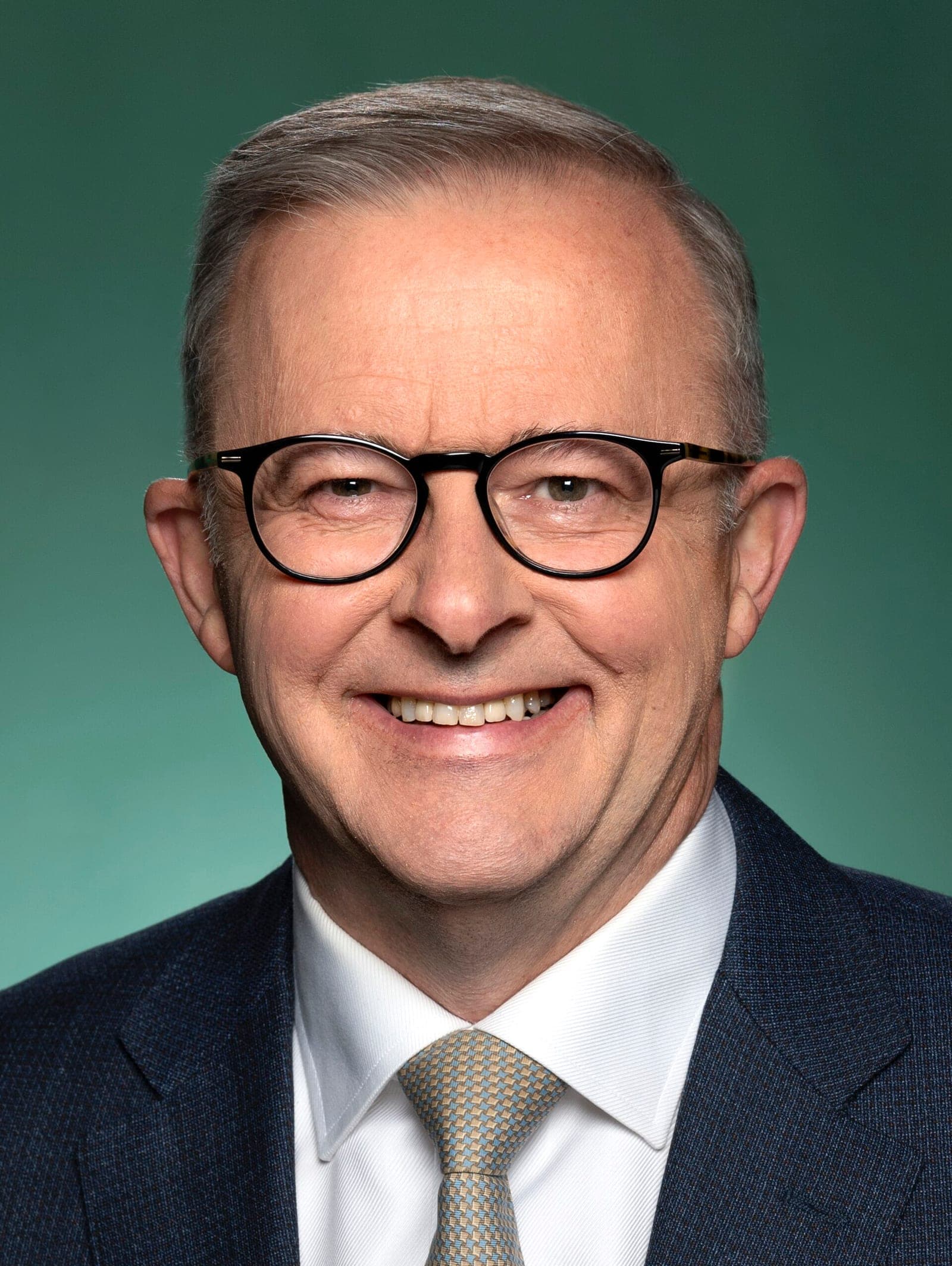
Prime Minister Anthony Albanese used a Canberra visit by his new Solomon Islands counterpart this week to declare that Australia intends to be the Pacific's "security partner of choice." The headlines wrote themselves: a strategic reset, a country once drifting toward Beijing pulled back into the family. Strip away the staging, however, and what was actually agreed on 2 June 2026 is thinner than the language suggests — an agreement to negotiate a treaty that does not yet exist, alongside a Chinese security pact that remains entirely in force.
What did Albanese and Wale actually agree?
Matthew Wale became Solomon Islands prime minister on 15 May 2026 through a parliamentary vote, replacing Jeremiah Manele, who had resisted Canberra's push for closer ties. In Canberra, Wale and Albanese committed to a "reset" of the relationship. "This will be agreed in a new comprehensive treaty underpinned by mutual trust, respect and open dialogue," Albanese said — before conceding the obvious: "Today is of course day one."
No treaty was signed. The leaders announced they would negotiate a comprehensive strategic treaty covering security and economic cooperation. The concrete deliverable was modest: A$35 million to help the Solomons with energy security and recovery from Tropical Cyclone Maila, plus progress on a long-stalled policing deal whose Honiara police academy is not due to be finished until 2028.
Is China's 2022 pact actually going away?
No — and that is the gap between the optics and the substance. The 2022 security pact, struck under former prime minister Manasseh Sogavare, alarmed Canberra and Washington because it was read as potentially allowing a Chinese naval presence in the South Pacific; China has since provided police instructors in the country. Wale has promised only to review it, and his own account of that review is hardly reassuring.
"I haven't had a good look at it. I've had a look at it... There is a nondisclosure clause in it, so I couldn't show it to you right away. But we are going to be reviewing the treaty, as we are reviewing other security agreements," he told reporters. Pressed further, he offered: "I've been praying and fasting about it, but of course cabinets will need to have a look at these things." A leader who has barely read the document, bound by a Chinese non-disclosure clause, is not a leader who has torn it up. The pact Canberra most wanted undone is still law in Honiara.
The bill for influence keeps growing
The Solomons announcement is the newest entry in an expanding ledger of Pacific spending. Australia led the RAMSI intervention from 2003 to 2017, deploying more than 7,000 Defence Force personnel; it provided $187 million in aid in 2018–19; and in December 2024 it signed a A$190 million policing agreement with the Solomons. The same pattern — generous, transactional, defensive — now spans the region.
| Recent Australian Pacific deal | When | Australia's commitment |
|---|---|---|
| Tuvalu (Falepili Union) | 2023 | Climate-migration pathway + security guarantee |
| Solomon Islands policing | Dec 2024 | A$190m police support, Honiara academy (due 2028) |
| Nauru treaty | 2024 | $100m over five years + $40m for police |
| Papua New Guinea treaty | 2025 | Finalised; security cooperation |
| Solomon Islands energy | Jun 2026 | $35m (energy + cyclone recovery) |
Lowy Institute analyst Daniel Flitton notes that Australia "has previously derided the 'chequebook diplomacy' that China and Taiwan practised across the Pacific" — a practice that "carried the risk of abetting local corruption." His warning about the current spree is pointed: "rather than an 'end' to the game, these moves could equally be read as upping the stakes," and "international agreements are not immutable." Money buys access, not allegiance, and — as Nauru's serial diplomatic switches show — today's signature can be tomorrow's bargaining chip.
Why the optics outrun the substance
The deeper problem is that Beijing can compete cheaply. During preparations for the 2025 Pacific Islands Forum in Honiara, China gifted 27 four-wheel-drives to ferry delegates while Australia supplied 22 vehicles to police as part of a larger package — a snapshot of a contest measured in fleets of SUVs. Chinese police trainers remain on the ground. And Wale himself was candid about the relationship he is now "resetting": "We acknowledge that there's been problems in the last few years, I'll be honest."
That honesty is worth holding the government to. An unsigned treaty, a live China pact, and a $35 million cheque do not amount to a strategic victory — they amount to day one. Albanese is entitled to pursue closer Pacific ties; voters are entitled to be told the difference between a relationship secured and a press conference held.