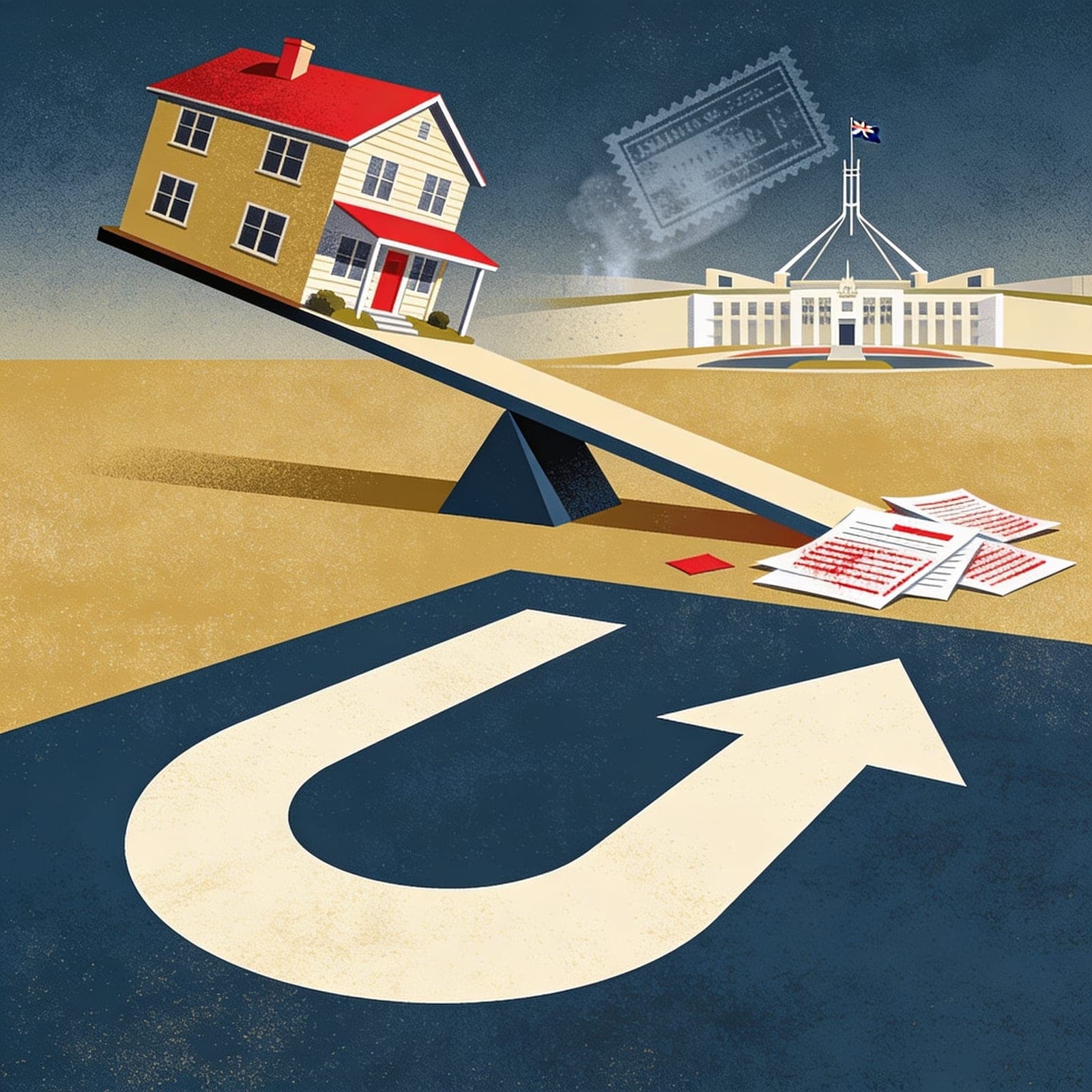
Australia's Labor government spent the 2025 election campaign insisting it would not touch the country's biggest property-tax breaks. Just over a year later, it is legislating exactly that. On June 4, 2026, the House of Representatives passed Labor's move to curb negative gearing and scrap the 50% capital gains tax (CGT) discount — changes Prime Minister Anthony Albanese had explicitly and repeatedly ruled out before polling day. For a government returned on a promise of stability, it is a striking reversal, and the way it has been handled makes it worse.
What did Labor rule out — then do anyway?
The record is not ambiguous. Asked in Cairns on April 8, 2025 whether he ruled out changes to capital gains tax and negative gearing, Albanese snapped, "Yes. How hard is it? For the 50th time," The Nightly reported, noting he "repeatedly ruled out" such changes throughout the campaign. Yet on June 4, 2026 the House passed both measures — and, per the same report, "the details of the exact changes and how they will be phased in have been kept under wraps." A government that won office partly by promising not to act is now acting, while withholding the specifics from the taxpayers who will foot the bill. Even while denying he had tried to hide the shift, Albanese conceded the about-face: "We couldn't continue to kick the can down the road. And we have made a difficult decision," he told reporters, according to SBS News.
Is this an isolated backflip?
No. It is the second major tax reversal in eight months. In October 2025, Treasurer Jim Chalmers unwound the centrepiece superannuation tax Labor had taken to the election — a 30% rate on earnings from balances above $3 million that controversially taxed unrealised gains and left the $3 million threshold unindexed. As The Conversation detailed, Chalmers dropped the unrealised-gains tax entirely, agreed to index the threshold, bolted on a new 40% rate above $10 million, and pushed the start date back a full year to July 1, 2026. Taken together, the two episodes show a government making tax policy on the run — reversing course in both directions within a single year.
| Tax measure | At the 2025 election, Labor… | In 2026, Labor is… |
|---|---|---|
| Capital gains tax discount | Ruled out any change ("For the 50th time," Apr 8 2025) | Scrapping the 50% discount (passed House Jun 4 2026) |
| Negative gearing | Ruled out any change | Curtailing it (passed House Jun 4 2026) |
| Super tax on balances over $3m | Campaigned on it: 30% rate, taxing unrealised gains, threshold unindexed | Retreated (Oct 2025): unrealised-gains tax dropped, threshold indexed, new 40% tier above $10m, start delayed to Jul 2026 |
What is the government's defence — and why it falls short
Albanese argues the election result was "the foundation for Labor's agenda, not the limit," adding that "another year has passed since the election, and not enough has changed" and that the government must "use every lever at our disposal," The Nightly reported. It is an artful line, but it does not survive contact with what was actually said. A promise to rule something out is not a foundation to build on — it is a commitment not to do the thing. Deputy Opposition Leader Jane Hume put it bluntly: "All of that has been a lie." Shadow Treasurer Tim Wilson said the government had "broken their word" and that its "Budget process is in complete disarray." On the central charge — that voters were told one thing and are getting another — the government has no real answer.
Who actually decides now?
Because Labor never sought a mandate for these taxes, it must rely on others to impose them. The changes now face a Senate fight in which the government "will likely need Greens support to pass the legislation," SBS reported. So a policy voters were repeatedly assured would never happen may become law only through a deal with a minor party — the precise opposite of the stable, predictable agenda Labor sold at the ballot box. Governing a non-mandated tax through the crossbench is not a mandate; it is a workaround.
Why it should worry voters
Tax policy runs on confidence: households and investors make decades-long decisions — on a home, a retirement, a small business — trusting that the rules a government swore to keep will hold. When an assurance repeated "for the 50th time" can be overturned within a year, and the fine print kept "under wraps" until after it has passed the House, every future promise is worth less. The issue is not whether negative gearing or the CGT discount should change — reasonable people disagree. It is that a government asked to keep faith with the people who re-elected it, and chose not to.