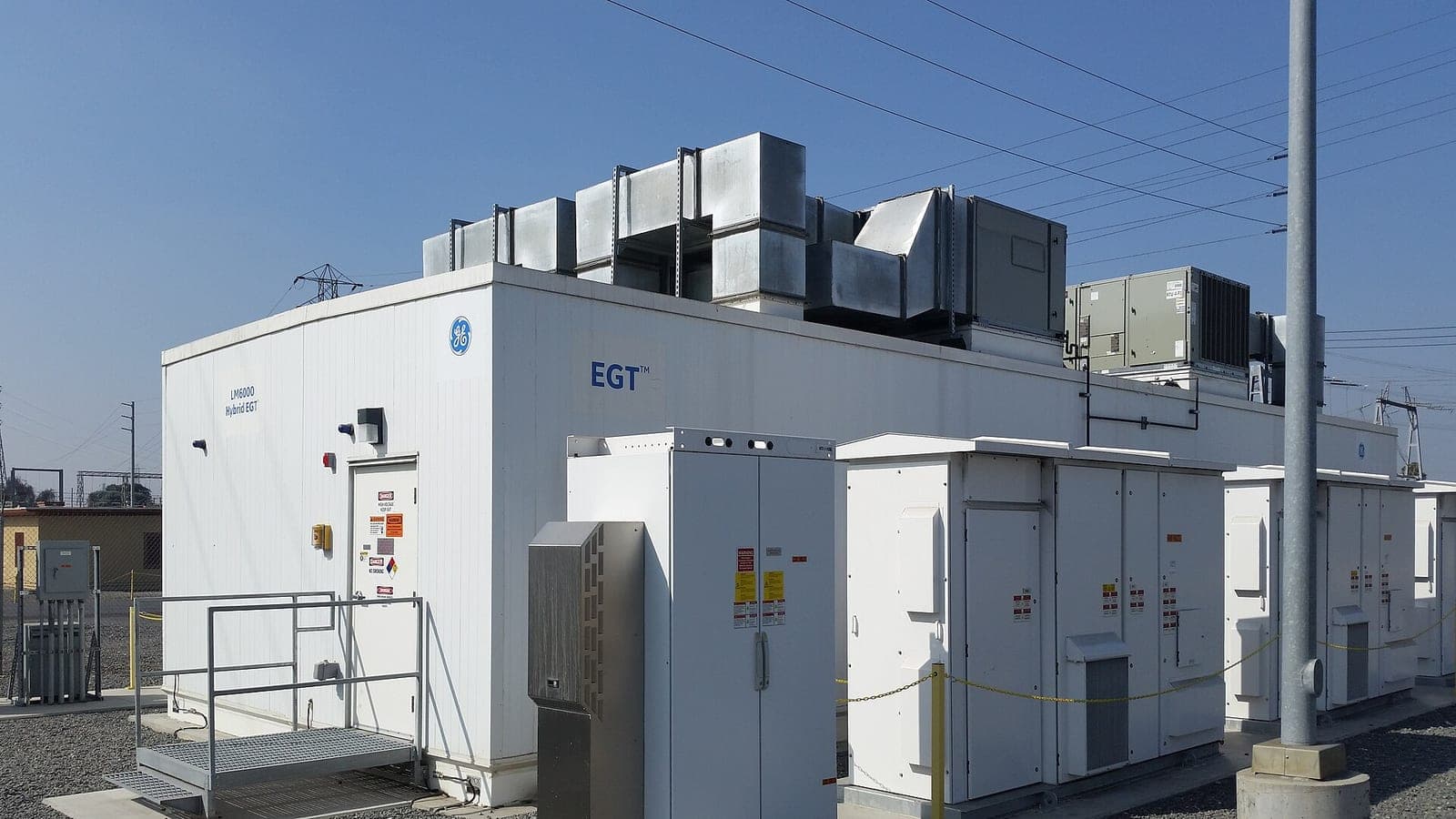
South Australia has announced the results of its first Firm Energy Reliability Mechanism (FERM) tender, awarding 15-year capacity agreements to six utility-scale battery storage projects totalling 1,334 MW and 5,336 MWh. The outcome, announced on 29 May 2026 by independent scheme administrator AusServices Ltd (ASL), will more than double the state's large-scale battery storage capacity — and every winning bid used lithium-ion technology, despite the tender's explicitly technology-neutral design.
A tender that dramatically exceeded its own target
The FERM process, created to address reliability gaps as South Australia pushes toward a legally-enshrined target of net 100% renewable electricity by 2027, initially sought 700 MW of long-duration dispatchable capacity. The awarded nameplate capacity of 1,334 MW is nearly double that figure, according to scheme documents published by ASL. Combined with existing assets, the state's large-scale battery storage will grow from approximately 1.1 GW to around 2.5 GW, per the SA government statement of 29 May 2026.
"The tender attracted robust competition, with successful projects performing strongly against the key assessment criteria," said ASL Chief Executive Officer Nevenka Codevelle in the announcement. ASL said its evaluation prioritised "a clear and credible pathway to commercial operation, a meaningful contribution to system reliability, and strong value for SA electricity consumers."
SA Premier Tom Koutsantonis put the economic case plainly: the six projects are expected to support an estimated AUD $2.2 billion (approximately USD $1.5 billion) of private investment in new storage infrastructure, according to the government's own statement.
The 8-hour requirement — and what it reveals about lithium-ion costs
The key technical specification distinguishing this tender from typical utility-scale battery procurements is a mandatory minimum of eight hours of continuous discharge during Forecast Lack of Reserve events — the most severe grid-stress conditions on the South Australian National Electricity Market (NEM). The committed dispatchable capacity under the FERMAs totals 517 MW / 4,136 MWh, enough in aggregate to power more than 300,000 households for eight hours, according to the SA government.
That eight-hour specification matters globally. The IEA reported in its June 2026 Battery Storage Report that the average duration of newly commissioned utility-scale battery projects reached only approximately three hours in 2025. An eight-hour requirement is rare and was widely assumed to require chemistry alternatives — vanadium redox flow, iron-air, or other long-duration technologies — to be economically competitive with standard lithium-ion.
All six winning projects use lithium-ion, a result that ASL's general manager commercial Thimo Mueller had flagged as a sign of the market's direction. Mueller told Energy Storage News that "cost declines in lithium-ion technology were delivering competitive pricing even for long-duration applications traditionally seen as the domain of alternative chemistries."
The six projects
Four projects were awarded in Tender Category 1, targeting commercial operation by November 2028:
- Goyder Battery Stage 1 & 2 (Neoen Australia): Two separate agreements, each carrying 75 MW / 600 MWh of committed capacity against a combined nameplate of 400 MW / 1,600 MWh, located in SA's Mid North region.
- Northern Battery (Ampyr Energy, Singapore-based): 125 MW / 1,000 MWh committed; 270 MW / 1,080 MWh nameplate.
- Tungkillo BESS (Iberdrola, Spain-based): 100 MW / 800 MWh committed; 270 MW / 1,080 MWh nameplate. Iberdrola acquired this project from RES Australia in 2025.
Two projects were awarded in Tender Category 2, targeting commercial operation by November 2029:
- Brinkworth BESS (Akaysha Energy, a BlackRock-owned Australian developer): 92 MW / 736 MWh committed; 250 MW / 1,000 MWh nameplate.
- Dartmoor BESS (ZEBRE, US-headquartered): 50 MW / 400 MWh committed; 144 MW / 576 MWh nameplate.
The combined committed delivery splits into two phases: 375 MW / 3,000 MWh operational by November 2028, followed by the remaining 142 MW / 1,136 MWh by November 2029.
Revenue structure and market design
Successful projects receive Firm Energy Reliability Mechanism Agreements (FERMAs) — 15-year contracts providing a revenue stream outside the energy spot market, underwriting a portion of each project's income to attract investment that would otherwise depend on infrequent and highly volatile high-price events. The FERM's Financial Vehicle, established in February 2026, holds scheme funds and acts as counterparty to all contracts.
The tender was structured as technology-neutral — coal and nuclear were explicitly excluded, but gas and pumped hydro were eligible alongside battery storage. The clean sweep by lithium-ion projects suggests that the structure succeeded in letting market economics decide, rather than predetermining an outcome.
South Australia's grid context
South Australia's electricity system already generates more than 70% of its electricity from renewables — among the highest penetration levels in the world for a jurisdiction of its size, according to ASL — and the state has been averaging more than 100% of local electricity demand from wind and solar during daylight periods. The FERM mechanism was specifically designed to address the reliability gap that emerges when generation temporarily undershoots demand, a risk that intensifies as the state's remaining gas generators retire.
The state pioneered grid-scale battery storage globally with the 2017 Tesla Hornsdale Power Reserve (now 150 MW / 193 MWh). The six new FERM projects together represent more than four times the capacity of the expanded Hornsdale facility.
Broader signals for the energy transition
The SA FERM result arrives as battery storage's role in grid operations shifts from peak shaving and frequency response toward true energy firming. The IEA recorded that the share of battery projects focused on energy shifting — not just ancillary services — rose from around 40% in 2015 to more than 90% in 2025, with average project durations lengthening.
The successful auction of 1,334 MW of eight-hour-capable lithium-ion storage in a single tender round, at commercial pricing sufficient to attract five international and domestic developers, adds a concrete data point to that trajectory. The tender's over-subscription also suggests that the pipeline of long-duration projects awaiting a revenue certainty mechanism is considerably larger than the 700 MW SA originally targeted — a finding that may inform future FERM rounds and similar mechanisms in other Australian states.