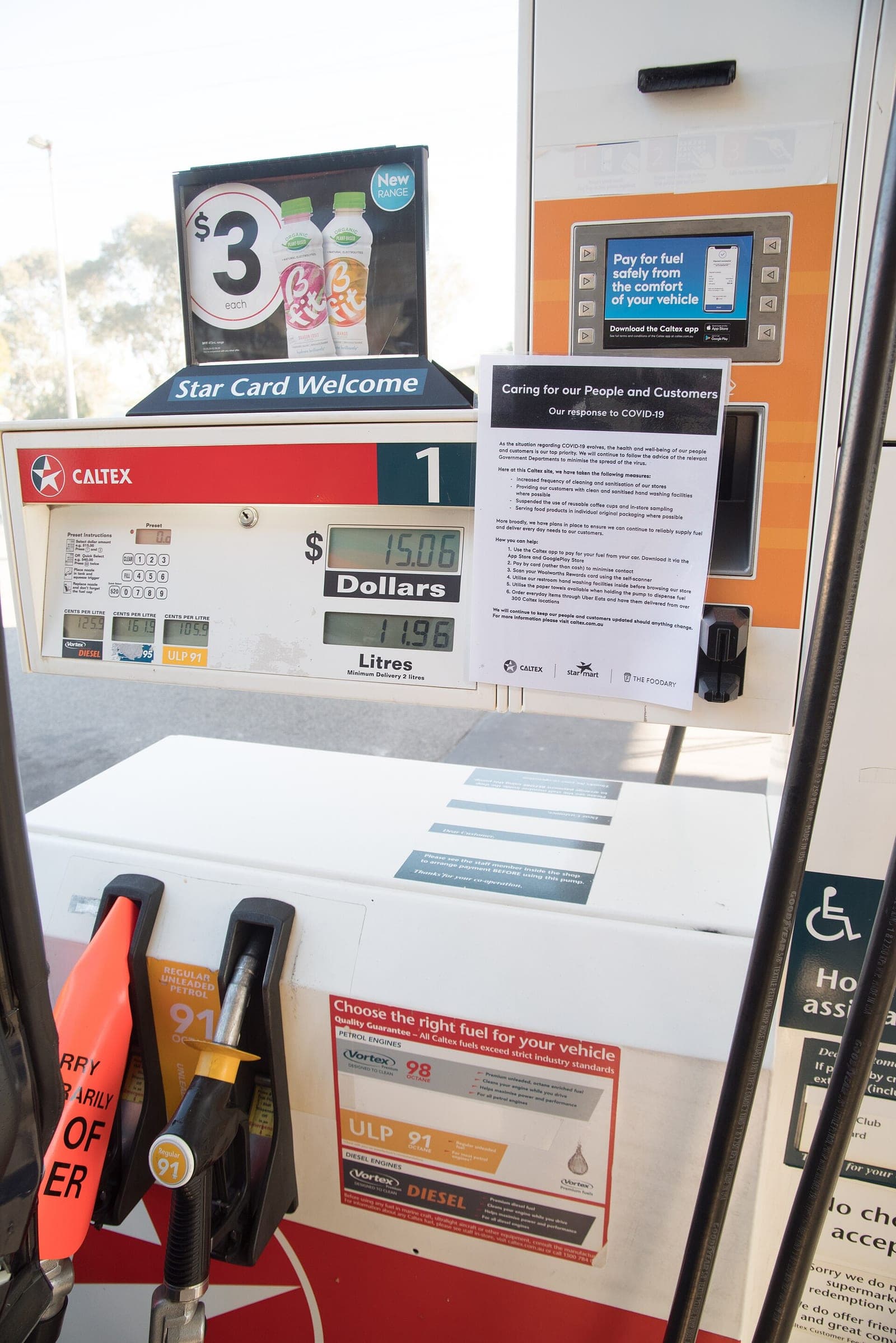
While political Canberra has been consumed by the CGT bill, the AUKUS submarine downgrade, and One Nation's historic polling surge, a more immediate threat has gone almost unremarked: on 1 July 2026 — in less than four weeks — the Albanese government's halved fuel excise expires, petrol and diesel prices will spike roughly 28.9 cents per litre at the bowser overnight, and Australia's September quarter CPI print will carry a shock that may prove impossible for the Reserve Bank to ignore.
The collision between Labor's fiscal improvisation and the RBA's battle to crush inflation is not hypothetical. It is now a matter of published record.
'An Uptick We Haven't Seen in a Long While'
On 2 June 2026, RBA Monetary Policy Board member Ian Harper delivered a speech to CEDA in Melbourne that deserves far more attention than it has received. Speaking in his official capacity as one of nine members of the Board — not, he stressed, on behalf of the Bank — Harper gave the most candid public assessment yet of where inflation expectations now sit.
Referring to market-derived long-term inflation measures, Harper warned that they have "taken an uptick" — and that "long-term inflation for the first time in a long while looks like it is now expected to be higher than it has been," with the three-year market measure suggesting inflation will remain outside the RBA's 2–3% target band for years to come, according to the published speech on the RBA's website.
This is not routine cautionary language. The risk that inflation expectations become "unanchored" — self-fulfilling, persistent, requiring ever-higher rates to suppress — is the central lesson the RBA drew from the 1970s. Harper made that comparison explicitly: when supply shocks add to existing capacity pressures, when demand is strong relative to supply, when businesses and consumers already expect prices to keep rising, "that's when you get persistence," he told the CEDA audience. "Sound familiar?" he asked.
He also flagged what is coming on July 1. The government temporarily halved the fuel excise from 52.6 cents per litre to 26.3 cents from 1 April, at a cost of $2.55 billion. "The government has also announced that it intends to reinstate the excise by the 1st of July," Harper noted, "and so you'll see some reversal of these charts here."
The RBA Board already knows the price shock is coming. The question is whether it will hike in response.
The Fiscal Fire in the Engine Room
This is where Labor's story falls apart. The government has relentlessly promoted the excise halving as evidence of its cost-of-living credentials — a measure that cut roughly $19 off a 65-litre tank fill. But economists were near-unanimous that the measure was itself inflationary. "It's government spending going into the economy. And when there's more spending in the economy, when there are scarce resources, prices go up," University of Sydney senior lecturer Luke Hartigan told SBS News when the measure was announced in March. The IMF separately warned that cost-of-living relief must be "targeted, timely and temporary" — and that temporary measures with hard expiry dates carry their own inflationary rebound risk.
On June 4, that reckoning is now due. RBA Governor Michele Bullock, alongside Assistant Governors Sarah Hunter and Christopher Kent, is scheduled to appear before the Senate Economics Legislation Committee at 3pm AEST for 2026-27 budget estimates hearings — an appearance the RBA's own events schedule confirms. Senators will have questions. The government's $18.3 billion fiscal stimulus in 2026-27 has been explicitly identified by Deloitte as a potential aggravator of inflation, complicating the RBA's already tortuous path back to the 2–3% target band. The budget deficit of $31.5 billion extends structural pressure on the economy at precisely the moment the RBA is trying to cool it.
Three Hikes Down, and Counting
The RBA has now raised rates three consecutive times in 2026 — in February, March, and May — bringing the cash rate to 4.35%. Those three hikes have wiped out every one of the three 2025 cuts that Labor celebrated as a political triumph, returning Australia to the previous cycle's peak, as confirmed in the RBA's own May monetary policy statement published on its website.
For an average variable-rate borrower with a $500,000 mortgage, the three 2026 hikes have already added approximately $225 per month in repayments compared to the August 2025 low, according to analysis by Nestpath. For a $600,000 mortgage, Canstar estimates the cumulative 2026 hike impact totals approximately $3,280 in additional annual repayments — assuming rates go no higher.
They may well go higher.
The 4.85 Scenario
Of the four major banks, two now predict the RBA is not finished. Westpac, in a forecast updated in May published on its website, predicts the cash rate will hit 4.85% by August-September 2026, following hikes at both the August 10-11 and September 28-29 board meetings. Westpac's chief economist Luci Ellis attributed the revised forecast to "the longer disruption to and slower recovery in fuel supply" and the "surprisingly rapid pass-through of higher fuel and other oil-derived product prices into other prices in Australia." At 4.85%, the cash rate would reach a level not seen since November 2008 — the depths of the Global Financial Crisis.
NAB is slightly less aggressive, forecasting a single further hike in August to 4.60%, according to Canstar's June 1 rate forecast summary. ANZ and CBA predict no further hikes, but both acknowledge August as a live risk.
The July 1 fuel excise reversal is what could seal the deal. Automotive fuel accounts for 3.5% of the CPI basket, per the ABS. WealthWorks, in analysis of the excise mechanics, found that "CPI data for Q3 2026 will show an artificial spike in the transport component" — precisely the same dynamic seen in September 2022 when that year's excise halving expired. A higher-than-expected Q3 CPI print, arriving weeks before the August RBA meeting, combined with already-elevated long-term inflation expectations, is the scenario in which Westpac's 4.85% call becomes reality.
The Bill Voters Weren't Shown
This is the real cost-of-living story Labor does not want told. The government spent $2.55 billion temporarily masking a fuel price it is about to unmask. It spent another $18.3 billion in fiscal stimulus that its own critics say is feeding the inflation the RBA is trying to kill. And it has presided over a three-hike cycle that has brought the cash rate back to its previous peak — with two of Australia's four major banks forecasting it will go further still, to levels not touched since John Howard was Prime Minister.
The RBA confirmed in the May rate statement that underlying inflation is not expected to return to the target band until 2027, and not to the 2.5% midpoint until 2028, per Harper's June 2 speech. That is not an inflation story. That is a government-financed inflation story — and from July 1, every Australian at a petrol station will be reading a chapter of it.
This is a commentary piece. All factual claims are sourced and cited. It does not constitute financial advice.